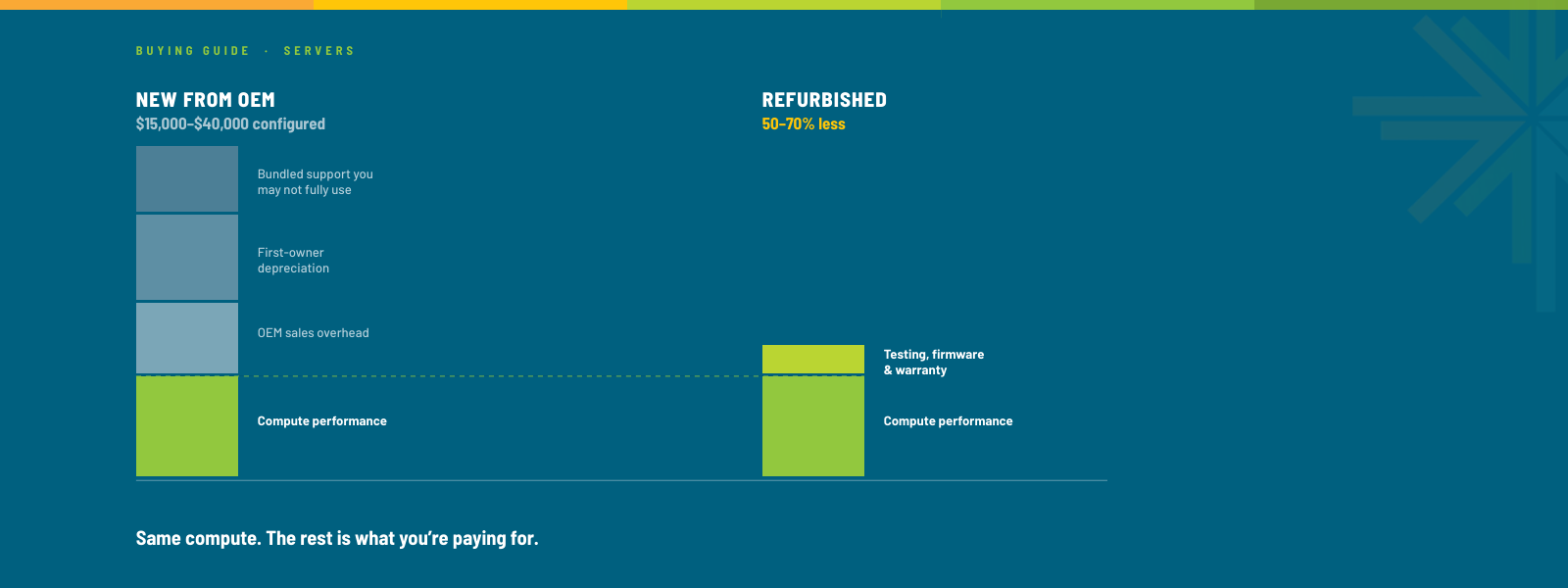
When IT budgets get reviewed, server spend is usually the first line item that raises eyebrows. A new dual-socket server from a tier-one OEM can run $15,000–$40,000 configured — yet a refurbished unit with identical specs often lands at 50–70% less. So what are you actually paying for with "new"?
Where the premium goes
A meaningful slice of a new server's price tag covers things that have nothing to do with how fast it runs your workloads: OEM sales overhead, first-owner depreciation (enterprise hardware loses a large share of its value the moment it ships), and bundled support contracts you may never fully use.
What refurbished actually means
Reputable refurbishers don't just wipe a machine and reship it. At Vibrant, every system is tested at the component level, updated to current firmware, configured to your spec, and backed by a warranty. R2v3 certification means the process — data sanitization included — is audited, not taken on faith.
When new still makes sense
There are legitimate reasons to buy new: bleeding-edge CPU generations, specific OEM support requirements, or compliance mandates that require it. For everything else — dev/test environments, storage expansion, scale-out compute, spare capacity — refurbished delivers the same uptime for a fraction of the spend.
The bottom line
The question isn't "new or used." It's "what does this workload actually require?" Answer that honestly, and the budget conversation gets a lot easier.
Have a project in mind? Talk to our team or browse current inventory.